17 Feb

Albert Bulow

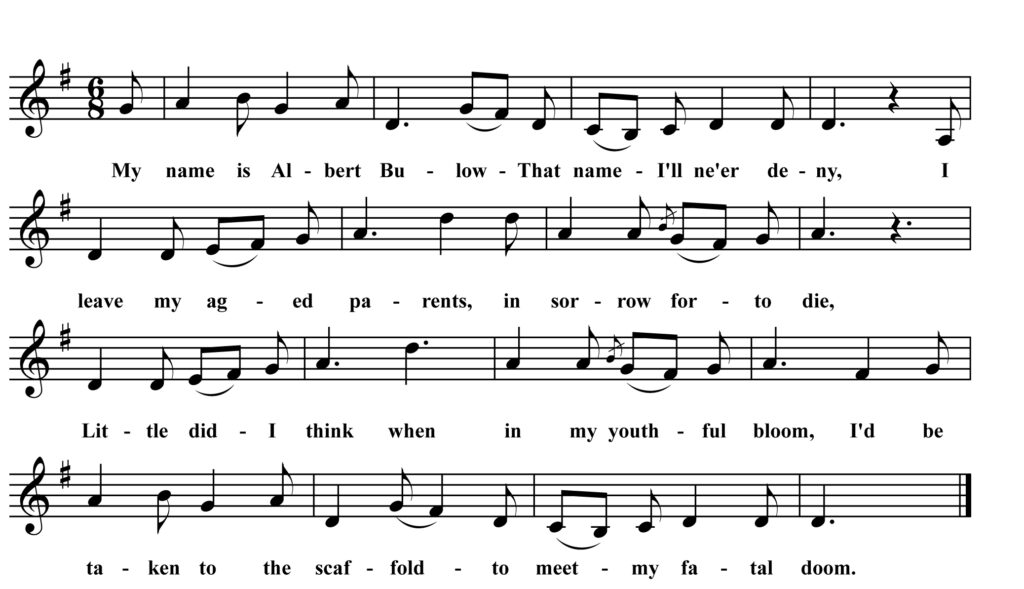
My name is Albert Bulow, that name I’ll never deny,
I leave my aged parents in sorrow for to die,
Little did I think, when in my youthful bloom,
I’d be taken to the scaffold, to meet my fatal doom.

Come, all you tender Christians, where ever you may be,
And likewise pay attention to these few lines you see,
For the murder of Franklin Eich, I am condemned to die,
On the nineteenth day of July, upon the scaffold high.   Cho.

It was in the city of Verndale I tried to make escape,
But Providence being against me, it proved to be too late,
They took me to the prison, all in my youthful bloom.
And now to the scaffold I must go to meet my fatal doom. Cho.

A mob thought to lynch me but the sheriff was warned in time,
And with Randall and their victim to Brainerd he did flee,
We left the angry mob all in their wrought up glee,
To leave the court of mercy deal justice unto me. Cho.

My friends came to see me and bid their last adieu,
They spoke their words of kindness and wept most bitterly.
And said to me, dear Albert, to-day you’ve got to die,
For the murder of Franklin Eich, upon the scaffold high. Cho.

Come, all young men, a warning take from me,
And leave a wild and sporting life; it leads to misery,
Bad company first, then liquor came in time;
It brought me down to the lowest, and to this awful crime. Cho.

It is sad, my friend, to leave you and bid you all good-bye,
But Fate is all against me and I am doomed to die,
That justice has been dealt to me, I’m not prepared to tell,
But God will treat me justly, he doeth all things well.

We start this year with a rare ballad that was actually printed as a broadside here in Minnesota in 1889. If newspaper accounts are true, it is also an example of a “gallows ballad” actually composed by the condemned criminal himself. The Morrison County Historical Society has an original broadside the heading of which reads:

EXECUTION SONG.
LITTLE FALLS, MINN. JULY 15, 1889
[WORDS COMPOSED BY ALBERT BULOW]
FIRST LINES SUNG AS CHORUS
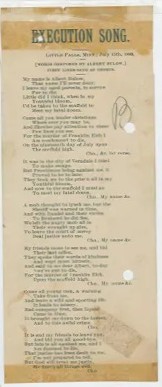
Bulow’s broadside from the Morrison Co. Historical Society

The murder of well-to-do farmer Franklin Eich outside of Royalton, Minnesota in October 1888 and the subsequent apprehension, trial and hanging of Albert Bulow was followed closely in the Little Falls newspapers as well as papers in the Twin Cities. Bulow was hanged for his crime in Little Falls at 1:52AM on July 19, 1889.

The Minneapolis Journal on July 18th wrote:

Bulow, in order to beguile the tedious hours of waiting until death shall set him free, has composed a little song which he calls his death song. There is not much poetry in the piece and Bulow does not pretend that he has made much of a success of his poem but he has had it printed all the same and has been selling copies of it at 5 cents a copy. What Bulow proposes to do with the money he has raised in this peculiar way he does not say. It is all the money he has.

The St. Paul Daily Globe on July 19th reported that Bulow possessed “the German love of music” and that the jailer’s wife organized a quartet for the prisoner in which “Bulow’s voice was never below the others.” The same article reports that:

A few days ago, with the assistance of his night watch, he ground out a poem on himself, which was printed and sold to curious visitors at 15 cents per copy.  

Bulow’s song, in typical folk song fashion, was clearly modeled on the earlier American-made gallows ballad “James Rogers” (Rodgers was executed in 1858). I matched the Bulow text to the melody song for the James Rogers song by Minnesota singer Mike Dean (which I shared in the June 2023 Northwoods Songs).
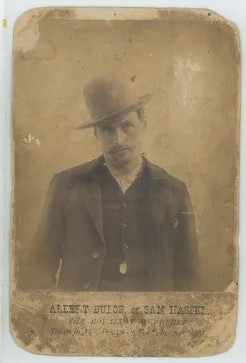
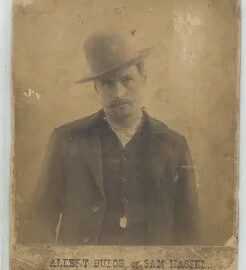
Albert Bulow. Morrison Co. Historical Society
01 Sep

The Rose of Ardee

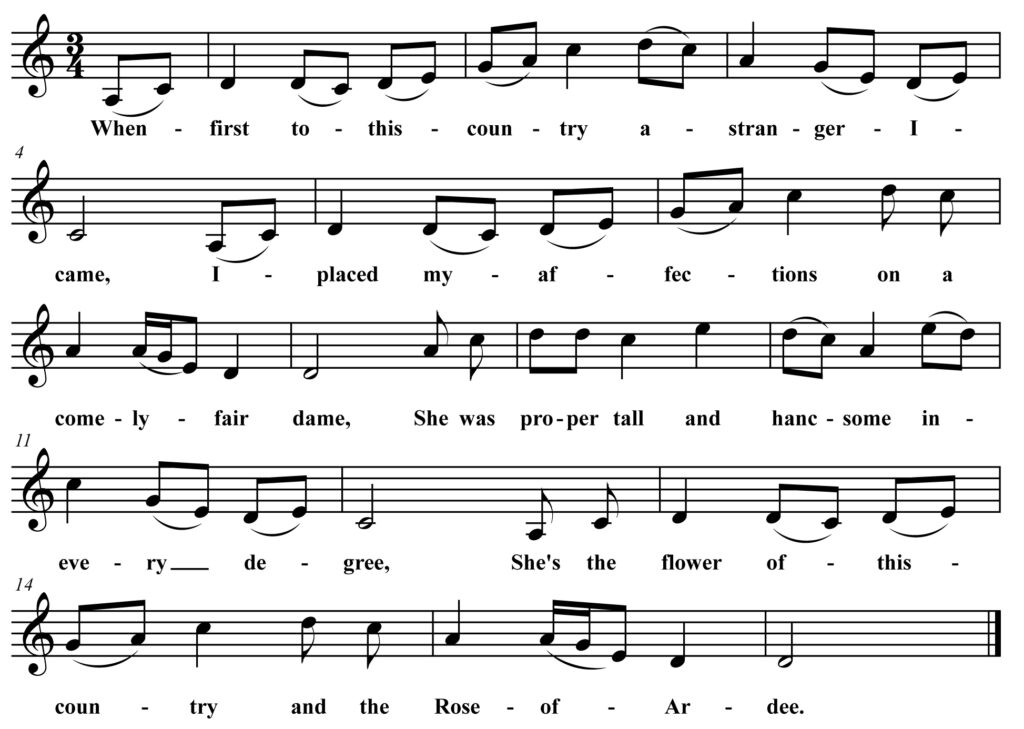
When first to this country a stranger I came,
I placed my affections on a comely fair dame,
She was proper, tall and handsome in every degree,
She’s the flower of this country and the Rose of Ardee.

I courted lovely Mary at the age of sixteen,
Her waist it was slender, her carriage genteel,
’Til at length a young weaver came there, her to see,
And stole the flower of the country, the Rose of Ardee.

My curse may it light on you, by day and by night,
You’ve fled with my true love, far, far from my sight,
And left me to mourn in a strange country,
For the loss of my darling the Rose of Ardee.

I’m bound to the city for months two or three,
And perhaps on my journey some pretty girl I’ll see,
In a short space of time she may prove kind to me,
But I never can forget the sweet Rose of Ardee.

When I get my week’s wages to the ale house I’ll go,
And there I’ll sit drinking with my heart full of woe,
I’ll sit there lamenting, expecting to see,
Once more my own true love, the Rose of Ardee.

I swear, lovely Mary, by the powers above,
Though inconstant you’ve been, I no other can love,
Oh if we could meet my sweet bride you should be,
And I should be blest with the Rose of Ardee.

Oh, lovely Mary you have been severe,
To slight your own true love that loved you so dear,
I must weep in despair until death I do see,
For the loss of my darling the Rose of Ardee.

Farewell lovely Mary though fled from my sight,
For you I am weeping by day and by night,
But I fear my sweet angel, I never shall see,
So adieu evermore to the Rose of Ardee.

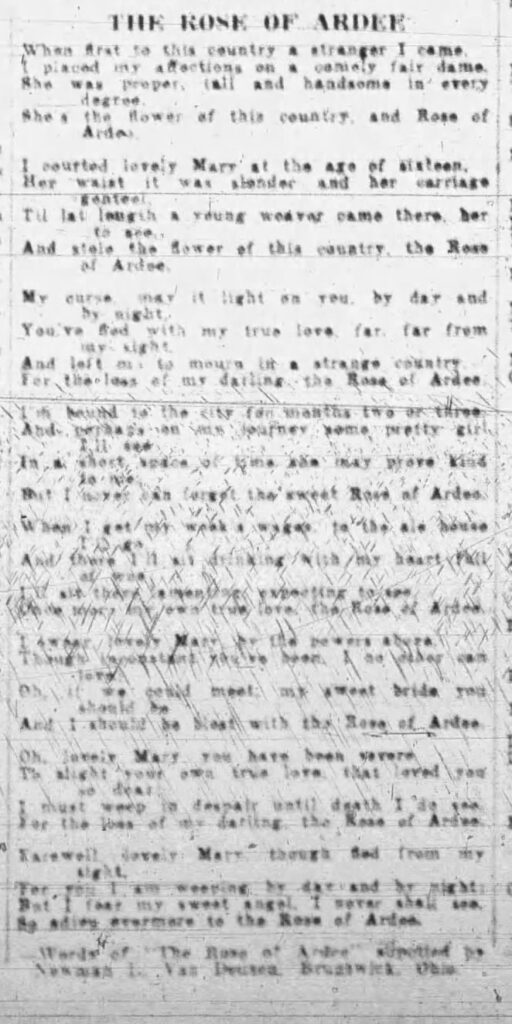
The “Old Songs Exchange” column that ran in the Minneapolis Journal from October 1923 to January 1925 drew many active readers/correspondents from outside Minnesota.  Newman Van Deusen/Dusen of Brunswick, Ohio may have contributed the words to last month’s song “My Emmett’s No More.” On October 5, 1924, the column ran Van Dusen’s request for the words to “The Rose of Ardee.” Curiously, Newman Van Deusen of Brunswick, Ohio is credited with sending in the words to the song when they were published on November 9, 1924.

It could be that Van Deusen found the text in a songster. His lengthy version closely matches (though not exactly) that printed by Henry De Marsan in New York in the 1868 New Comic and Sentimental Singer’s Journal. A much shorter, fragmentary text for the song appears in a western New York family songbook (circa 1841-1856) published by Harold W. Thompson as A Pioneer Songster so it does seem plausible that the song made it in to tradition in the Lakes states.

“The Rose of Ardee” is sung in the north of Ireland and I have married the Minneapolis Journal text to the air used by Desi Wilkinson on his album The Three Piece Flute.

“The Rose of Ardee” as it appears in the 11/09/1924 “Old Songs Exchangecolumn in the Minneapolis Journal

23 Aug

My Emmett’s No More

Despair in her wild eye, a daughter of Erin,
Appeared on the cliffs of the wild, rocky shore,
Loose in the wind flowed her dark, streaming ringlets,
Heedless she gazed on the dread surge’s roar.
Loud rang her harp in wild tones of despairing,
The time passed away with the present comparing,
And in soul-thrilling strains deeper sorrow declaring,
She sang Erin’s woes, for her Emmett’s no more.

Ah, Erin, my country, your glory’s departed,
For tyrants and traitors have stabbed thy heart’s core,
Thy daughters have laid in the streams of affliction,
Thy patriots have fled or lie stretched in their gore.
Ruthless ruffians now prowl through they hamlets forsaken,
From pale, hungry orphans their last morsel have taken,
The screams of thy females no pity awaken
Alas! My poor country, your Emmett’s no more.

Brave was his spirit yet wild as the Brahmin,
His heart bled in anguish at the wrongs of the poor,
To relieve their hard sufferings he braved every danger,
The vengeance of tyrants undauntedly bore.
Before him the proud, titled villains in power,
Were seen though in ermine, in terror to cower
But, alas! He is gone—he’s a fallen young flower,
They have murdered my Emmett—my Emmett’s no more.

Roud no: 34010  

Thanks to the wonders of the archive at newspapers.com, I recently discovered a new source for Minnesota folk songs! On most Sundays between October 1923 and January 1925, the Minneapolis Journal ran a column called “The Old Songs Exchange: Words That Journal Readers Ask For.” Similar to the “Old Songs That Men Have Sung” column in Adventure Magazine I have used in my research before, the Old Songs Exchange was full of fascinating folk and stage song texts submitted by readers of the paper—complete with, in most cases, attribution for who sent in the words.

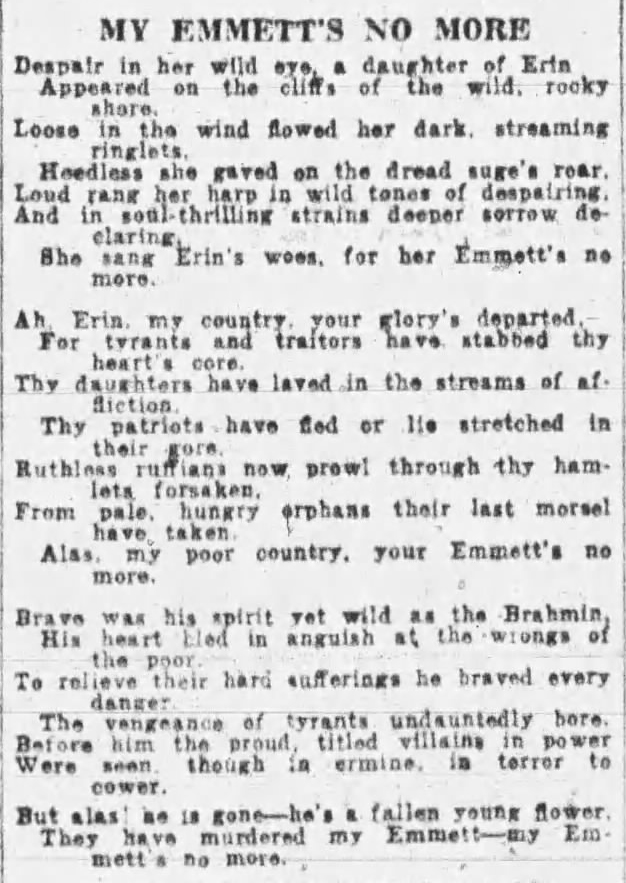
The Sunday, November 2, 1924 column includes “My Emmett’s No More,” a somewhat rare song commemorating Robert Emmett and the 1798 uprising in Ireland. Unfortunately, the Journal gave no attribution for this one. The four other song texts printed that day were supplied by Newman L. Deusen of Brunswick, Ohio; Mrs. Laura M. Klinefelter of Steele, North Dakota; and Mrs. Lula I. Godwin of Minneapolis so it is possible that the Emmett song came from one of them. The text in the Journal does seem to be from someone’s memory as it is missing a couple lines from what would have appeared in a songster or broadside (many songsters in both Ireland and US did print the song). See below for the text as it appeared in the Minneapolis Journal.

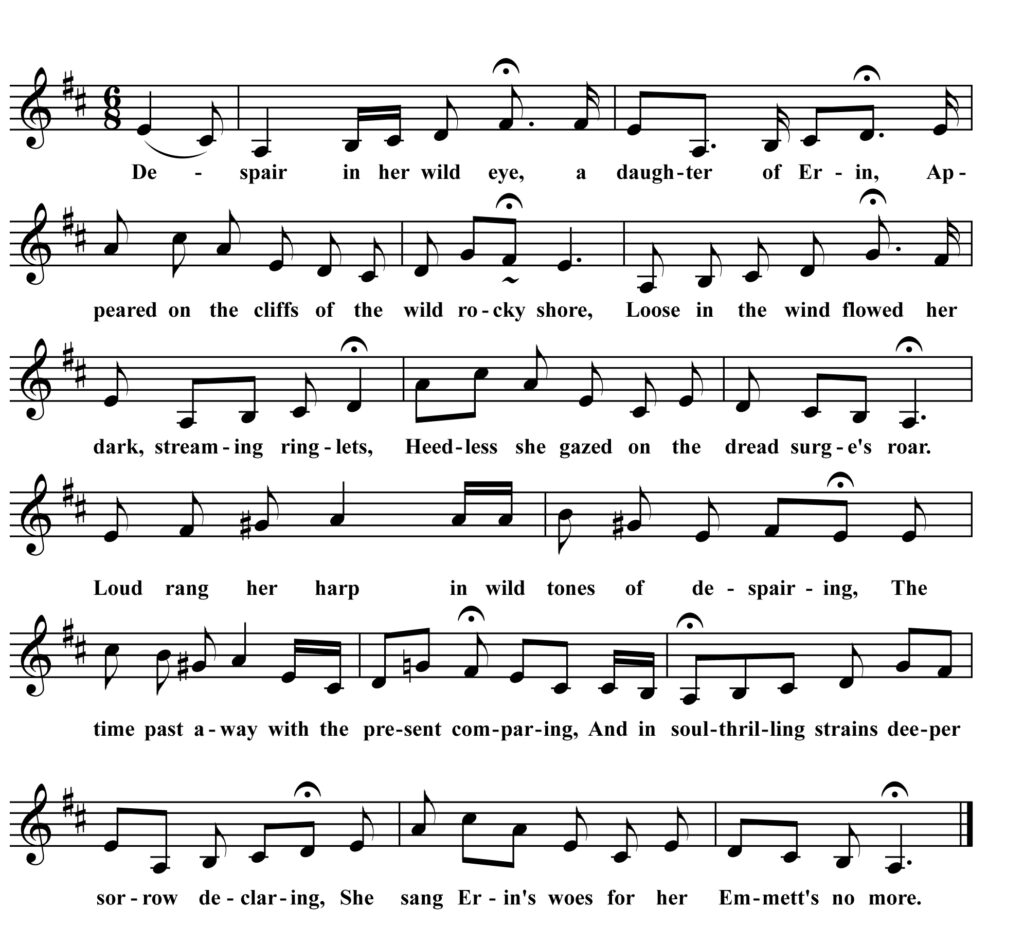
I have married the Minneapolis-printed text to the melody sung by Irish singer (and dancer) Páidí Bán Ó Broin whose rendition appears in the Comhaltas Ceoltóirí Éireann digital archive. Ó Broin was part of the Comhaltas touring group that visited Minnesota in 1976 and stayed with Lucy and Jack Fallon in St. Paul. I also filled in a couple missing lines using a version printed by Terry Moylan in The Age of Revolution in the Irish Song Tradition.

Heading of the “Old Songs Exchange” column in the November 2, 1924 Minneapolis Journal.
“My Emmett’s No More” as printed in the “Old Songs Exchange” column of the November 2, 1924 Minneapolis Journal.