04 Sep

Johanna Shay

Johanna Shay

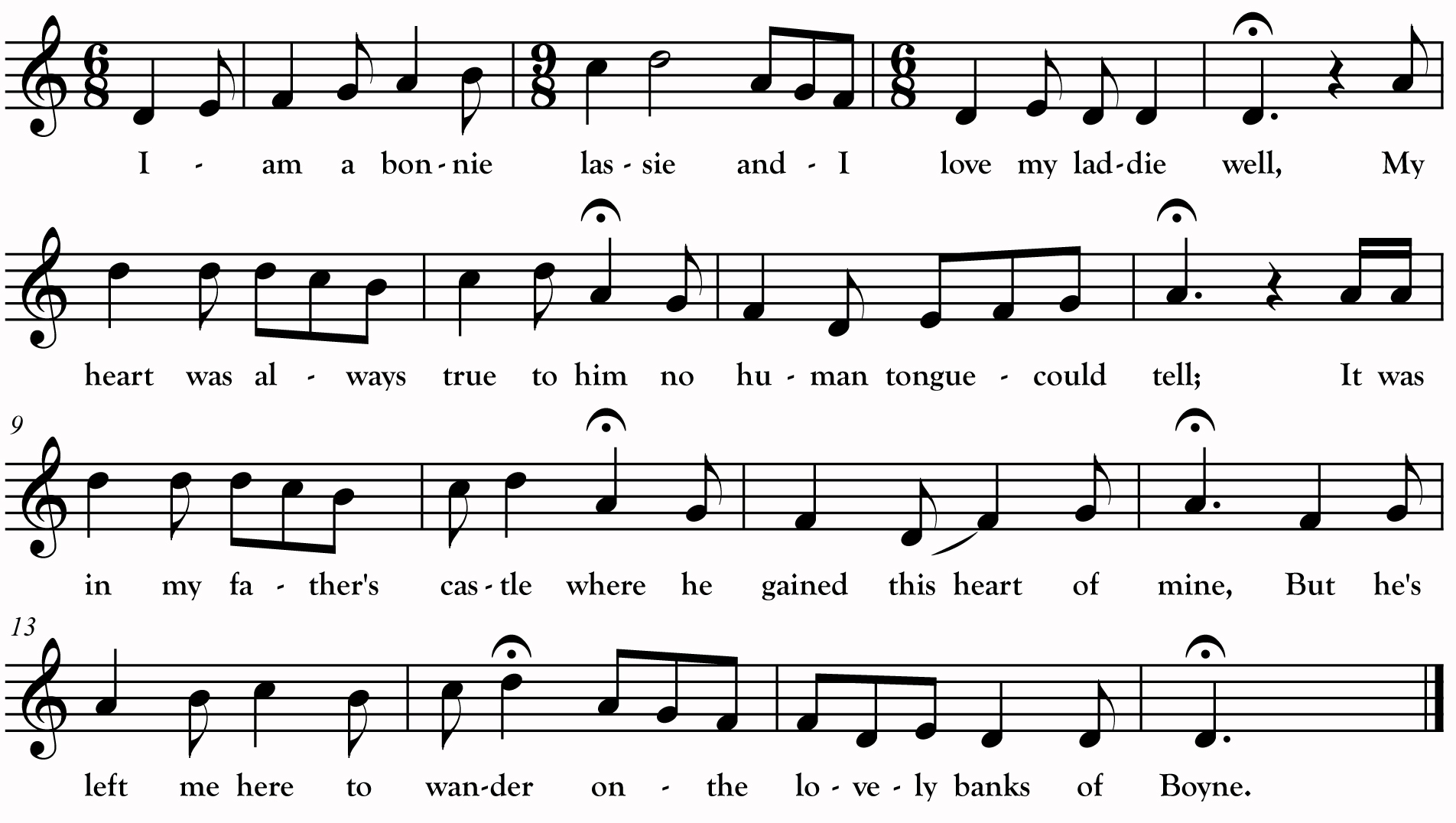
In the Emerald Isle so far from here across the dark blue sea,
There lives a maid that I love dear and I know that she loves me,
With roguish eyes of Irish blue her cheeks like dawn of day,
Oh, the sunshine of my life she is, my own Johanna Shay.

Oh, Johanna is tall and lovely and like a lily fair,
She is the prettiest girl that can be found in the County of Kildare,
And if I have good luck, me boys, I’ll make her Mrs. O’Day,
For my bundle I’ll pack and I’ll sail right back to my own Johanna Shay.

There’s a bird in yonder garden singing from a willow tree,
That makes me think of Johanna when she used to sing to me;
When side by side o’er the mountains or by the lake we strolled,
And her cheeks would flush with an honest blush whenever a kiss I stole;
Though the ocean rolls between us, if harm was in her way,
I would jump right in and boldly swim to my own Johanna Shay.

______________________________________________________________

This summer marks the 90th anniversary of a productive three-week song collecting trip around Minnesota and northwestern Wisconsin by folksong collector Franz Rickaby. Rickaby had just finished his final year as English professor at the University of North Dakota in 1923 and was about to move to the warmer climes of California in an attempt to ease the pain of rheumatic fever—the disease that tragically cut his life, and the preservation of Upper Midwestern traditional folksong, short. He gathered songs first in Bemidji and then met with prolific singer Michael Dean in Virginia, MN before heading to Eau Claire, WI and Bayport, MN. The above song text comes from Dean’s repertoire as printed, not by Rickaby, but by Dean in his self-published songster The Flying Cloud. Rickaby did not transcribe “Johanna Shay” from Dean’s singing, but he did jot down the melody used for it by Eau Claire singer Elide Marceau Fox. I married Fox’s melody to Dean’s text above.

I have found not one single other instance of this song in any other collection of texts, transcriptions or recordings—remarkable in this age of searchable digital archives and well-researched databases of folk song! Fox’s melody (and some of the poetry) hints at a connection to the Irish Music Hall song-writers of the 1800s. Whether it was born on the stage or was simply in imitation of that style we may never now. Still, quite a nice little song I think.

19 Jul

New Album “The Falling of the Pine” Out Soon!

Miller_CD Case_bd_final

Sample tracks from our upcoming release The Falling of the Pine:

The Jolly Raftsman
Jails of Buffalo
Leizime Brusoe’s / Morton’s
Heights of Alma

We are happy to announce that this CD will be available for purchase (both digitally and physically) by the end of July. Randy and I went in to the Hideaway Studio in Minneapolis in January with a mix of our favorite material we’ve been working on for the past two years.  Building on the theme and sound of “Minnesota Lumberjack Songs,” “The Falling of the Pine” includes songs and dance tunes from North Dakota, Minnesota, Wisconsin, Michigan, and Ontario. We play guitar, bouzouki, mandolin, mandola, tenor banjo and harmonium on the recording.

This CD was made possible, in part, by the voters of Minnesota through a grant from the Minnesota State Arts Board.

Watch this space for ordering information!

-Brian

04 Jun

Shanty Boy (and the Farmer’s Son)

Shanty Boy_Gordon
As I walked out one evening just as the sun went down,
So carelessly I wandered to a place called Stroner town,
Where I heard two maids conversing as slowly I passed by,
One said she loved her farmer’s son, and the other her shanty boy.

The one that loved her farmer’s son those words I heard her say,
The reason why she loved him, at home with her he’d stay,
He would stay at home all winter, to the woods he would not go,
And when the spring it did come in his grounds he’d plow and sow.

“All for to plow and sow your land,” the other girl did say,
If the crops should prove a failure your debts you couldn’t pay;
If the crops should prove a failure, or the grain market be low,
The sheriff often sells you out to pay the debts you owe.”

“As for the sheriff selling the lot, it does not me alarm,
For there’s no need of going in debt if you are on a good farm;
You make your bread from off the land, need not work through storms and rain,
While your shanty boy works hard each day his family to maintain.”

“I only love my shanty boy who goes out in the fall,
He is both stout and hardy, well fit for every squall;
With pleasure I’ll receive him in the spring when he comes home,
And his money free he will share with me when your farmer’s son has none.”

“Oh, why do you love a shanty boy, to the wild woods he must go,
He is ordered out before daylight to work through rain and snow,
While happy and contented my farmer’s son can lie,
And tell to me some tales of love as the cold winds whistle by.”

“I don’t see why you love a farmer,” the other girl did say,
“The most of them they are so green the cows would eat for hay;
It is easy you may know them whenever they’re in town,
The small boys run up to them saying, ‘Rube, how are you down?’

“For what I have said of your shanty boy I hope you will pardon me,
And from that ignorant mossback I hope to soon get free,
And if ever I get rid of him for a shanty boy I will go,
I will leave him broken hearted his grounds to plow and sow.”

___________________________________________________________
When they met up in Virginia, MN in 1923, singer Michael Cassius Dean told song collector Franz Rickaby that he learned this song while himself working as a “shanty boy” (lumberjack) in Michigan around 1878. “Stronertown,” Dean said, was at the head of the Manistee River, six miles up from Manistee, Michigan. I find a Stronach, MI on modern maps that is likely the spot. The song is often called “The Shanty Boy and the Farmer’s Son” and it appears frequently in song collections made throughout the lumbering regions of the Great Lakes and Maritimes. It even managed the rare trip east across the Atlantic where it was collected in County Antrim by Sam Henry in 1936.

I transcribed the above melody from the 1924 recording of Dean made by Robert Winslow Gordon. Another, slightly different, version was transcribed by Rickaby in 1923 from the singing of Ed “Arkansaw” Springstead in my hometown Bemidji, MN.

This text belongs to a family of similar dialogue songs and poems that date back centuries in England, Scotland and Ireland. Its direct “parent” song may be “I Love My Sailor Boy” which also appears in Dean’s songster The Flying Cloud (my source for the above text). Shanty-boys sang at least a few songs poking fun at sober, boring farmers who, they assured themselves, were sadly lacking in the manly mystique personified by the men chopping down trees and heroically rafting them downriver to the sawmill.

More detailed information on this song from the Traditional Ballad Index